
Why Are There So Many Flies in My House in Autumn?
CallDoncaster: 01302 969049
Sheffield: 0114 419 2049
If you’ve suddenly noticed dozens of flies gathering around your windows, you’re certainly not alone. Autumn often brings unexpected insect problems into homes and businesses. So, Why Are There So Many Flies in My House in Autumn? The answer could involve cluster flies seeking somewhere sheltered for winter. If the problem becomes difficult to manage, professional pest control in Doncaster can help identify the insects and recommend suitable treatment.
Why Do Flies Appear in Doncaster Homes During Autumn?
As temperatures drop, certain fly species begin searching for sheltered places to spend the colder months. Cluster flies are particularly noticeable during autumn. Unlike common houseflies, they don’t usually enter buildings because of food waste or dirty kitchens. Instead, they look for quiet spaces where they can remain protected from the weather. Lofts, roof spaces, wall cavities and unused rooms can provide ideal conditions. Furthermore, cluster flies often gather around sunny windows and upper floors. Homeowners may suddenly discover large numbers, even when their property is perfectly clean.
What Are Cluster Flies and How Can You Identify Them?
Cluster flies resemble ordinary houseflies, although they tend to move more slowly. They are usually dark grey, with fine golden hairs on their bodies. However, these features aren’t always easy to recognise without a closer inspection.
Common signs include:
- Groups of flies gathering around upstairs windows.
- Flies appearing in lofts or roof spaces.
- Sluggish insects crawling across window frames.
- Several flies emerging during warmer autumn afternoons.
- Repeated appearances despite removing individual insects.
Unlike common houseflies, cluster flies develop as parasites of earthworms outdoors. Therefore, their presence doesn’t automatically indicate poor hygiene. However, large numbers can become extremely frustrating, especially when insects repeatedly enter living areas.
Why Are There So Many Flies in My House in Autumn?
The main reason is that cluster flies are searching for somewhere to overwinter. During late summer and autumn, they may enter properties through gaps around roof tiles, vents, window frames and other external openings. Once inside, they gather in sheltered spaces. Interestingly, warm weather can make the problem more noticeable. When sunlight heats the building, previously inactive flies may begin moving towards windows. Consequently, homeowners sometimes believe a new infestation has suddenly appeared. In reality, the insects may have been hiding inside the property for several weeks. Some buildings experience the same problem year after year. This can happen when suitable shelter and access points remain available.
Can Cluster Flies Cause Damage or Spread Disease?
Cluster flies are generally considered nuisance pests rather than a major health threat. They don’t bite, and they don’t normally damage furniture, insulation or building materials. However, large numbers can still cause problems. Dead insects may accumulate around windows and inside light fittings. Furthermore, repeated infestations can make rooms unpleasant to use. Businesses may face additional concerns. For example, flies gathering around customer areas can create a poor impression. In food-handling environments, any fly activity requires careful attention to hygiene and contamination risks. Therefore, identifying the species correctly is particularly important before deciding how to respond.
How Can You Stop Flies Entering Your Property?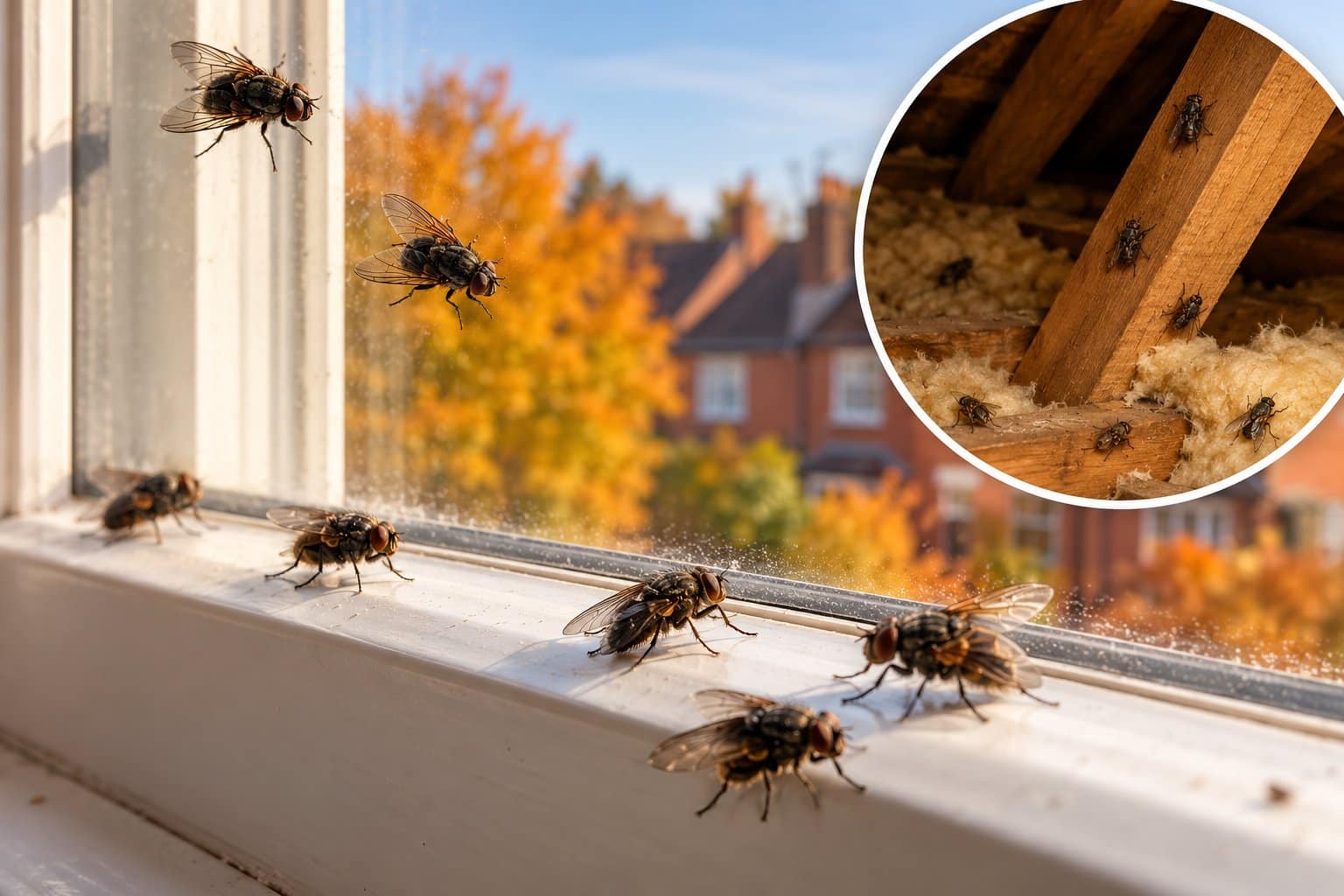
Prevention often begins with reducing the number of places insects can enter. Check external window frames, roofline gaps and damaged seals. Repairing suitable entry points can help prevent future problems. However, ventilation openings should never be blocked without considering their purpose.
You can also take several practical steps:
- Fit suitable insect screens where possible.
- Keep windows closed when flies are gathering outside.
- Vacuum visible insects and dispose of the contents securely.
- Inspect loft spaces for signs of repeated activity.
- Arrange professional advice for larger infestations.
Avoid spraying insecticides indiscriminately into lofts or enclosed spaces. Professional pest controllers can identify the insects and assess whether treatment is necessary. Importantly, successful control may require both treatment and preventative measures.
When Should You Contact a Pest Control Specialist in Doncaster?
A few flies around a window don’t always indicate a serious problem. However, repeated appearances or large gatherings may suggest insects are overwintering inside the building. This is particularly relevant when flies return every autumn. A professional inspection can help establish the species, locate likely harbourage areas and identify potential access points. As a result, you can take a more targeted approach rather than repeatedly treating visible insects. For commercial premises, early intervention can also help reduce disruption and protect customer confidence.
Contact Topline Pest Control
If you’re experiencing repeated fly problems, Topline Pest Control can help. Our experienced team provides professional pest identification, advice and treatment solutions for homes and businesses throughout Doncaster. Contact us today to discuss your concerns and find out how we can help keep unwanted pests under control.