
Why Do Rats and Mice Come Indoors in Autumn?
CallDoncaster: 01302 969049
Sheffield: 0114 419 2049
As temperatures begin to fall, homes and businesses can become much more attractive to rodents. Rats and mice need food, warmth and shelter. Unfortunately, our properties can provide all three.
Why Do Rats and Mice Come Indoors in Autumn? is therefore a particularly important question for Doncaster property owners. Spotting the early warning signs could prevent a small problem becoming a much larger infestation. If you need professional pest control in Doncaster, acting early can also make the problem easier to manage.
Why Are Rats and Mice More Noticeable During Autumn?
Rats and mice remain active throughout the year. However, colder weather often encourages them to search for sheltered locations. Garages, lofts, wall cavities, sheds, warehouses and commercial buildings can all provide suitable hiding places. Food also becomes an important factor. Rodents are opportunistic feeders and will investigate accessible food sources. Pet food, bird seed, household waste and poorly stored food can all attract them. Therefore, autumn is a good time to inspect your property for potential entry points.
How Do Rats and Mice Get Into Buildings?
Mice can exploit surprisingly small gaps. Rats can also squeeze through openings that many property owners would overlook. Common entry points include gaps around pipes, damaged air bricks and holes around doors. They may also enter through drainage systems or damaged areas of a building. Older properties can be particularly vulnerable because small defects develop over time. However, newer buildings aren’t automatically protected. Gaps created around utility pipes, extensions and alterations can provide opportunities too. This is one reason professional pest control involves more than simply dealing with the rodents present. Finding out how they entered is equally important.
What Are the First Signs of Rats or Mice?
Droppings are one of the most common warning signs. You might notice them inside cupboards, garages, lofts or behind appliances. Scratching noises can also indicate activity. Rodents are often most active when a property becomes quiet. Other warning signs include gnaw marks, damaged food packaging and unusual smells. You may also notice shredded paper, fabric or insulation used as nesting material. Greasy marks can sometimes appear along frequently travelled routes too. Why Do Rats and Mice Come Indoors in Autumn? becomes much easier to understand when you consider what rodents need. If your property offers shelter, food and easy access, it can become an attractive environment.
Will Rats and Mice Go Away on Their Own?
It is rarely sensible to simply wait and hope a rodent problem disappears. If rodents have found reliable food and shelter, they have little reason to leave. Furthermore, rodents can reproduce quickly when conditions are favourable. The longer an infestation remains unnoticed, the more difficult it can become to establish its full extent. Rodents can also damage packaging, insulation, timber and other materials through gnawing. Therefore, early action is usually the better approach.
How Can I Make My Property Less Attractive to Rodents?
Start by removing easy food sources. Keep food in sealed containers and avoid leaving pet food out overnight. Outside, ensure bins close correctly and avoid allowing rubbish to accumulate. Next, look around the exterior of your property. Check doors, pipework, brickwork and ventilation points for possible gaps. Gardens should also receive attention. Overgrown vegetation and accumulated materials can provide sheltered areas close to buildings. Commercial premises should maintain particularly good waste-management practices. Regular inspections can also identify pest activity before it becomes a significant problem.
Should I Use DIY Rat or Mouse Treatments?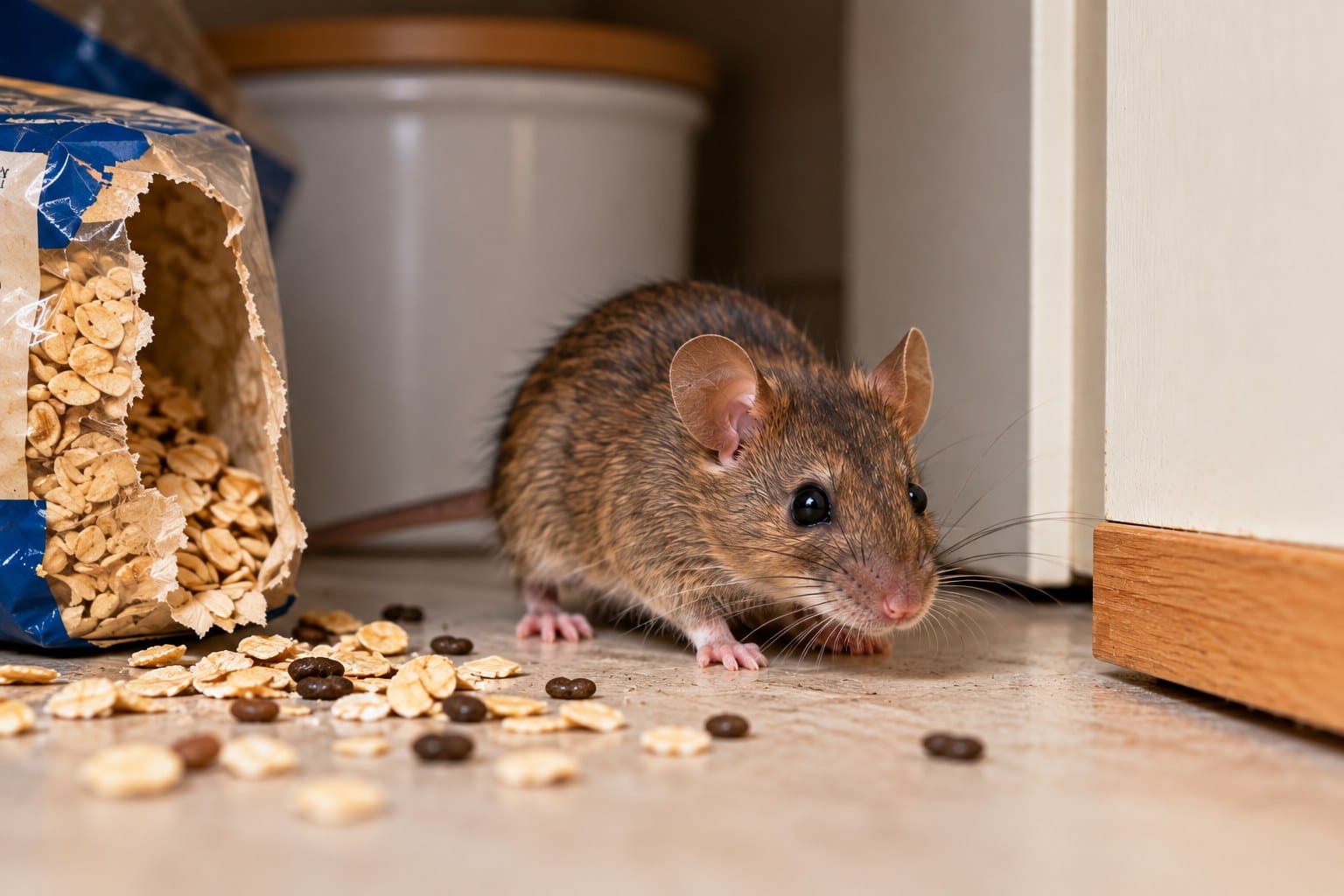
Shop-bought traps and products are widely available. However, treating the visible signs doesn’t necessarily identify the source of the infestation. You need to know which pest you’re dealing with, where it is travelling and how it entered the building. Professional pest controllers can assess these factors before recommending an appropriate treatment plan. Furthermore, professional advice can help you reduce the chance of another infestation developing.
When Should I Call a Pest Controller?
Contact a pest controller when you notice droppings, scratching, gnaw marks or other unexplained signs of activity. You don’t need to wait until you actually see a rat or mouse. In fact, early investigation may make it easier to identify where the rodents are entering. So, Why Do Rats and Mice Come Indoors in Autumn? Usually, they are searching for the same things we enjoy during colder weather: food, warmth and shelter.
Contact Topline Pest Control
If you’ve noticed signs of rats or mice around your Doncaster property, contact Topline Pest Control. Our experienced team can assess the problem, recommend suitable treatment and provide practical advice to help prevent pests returning.